Build a strategy
A strategy holds the stop, targets and size. Your alerts decide when it trades.
Start from an alert or a shape#
- Send me one alert. With the Signal Connector on your chart, its first alert builds the strategy.
- One target takes everything off at 2R.
- Scale out takes a third off at 1R, half of what is left at 2R and the rest at 3R.
- Breakeven, then run takes half off at 1R and moves the stop to break-even.
A strategy holds up to 10 targets. Preview shows what an example account loses if the stop fills, and makes if every target fills.
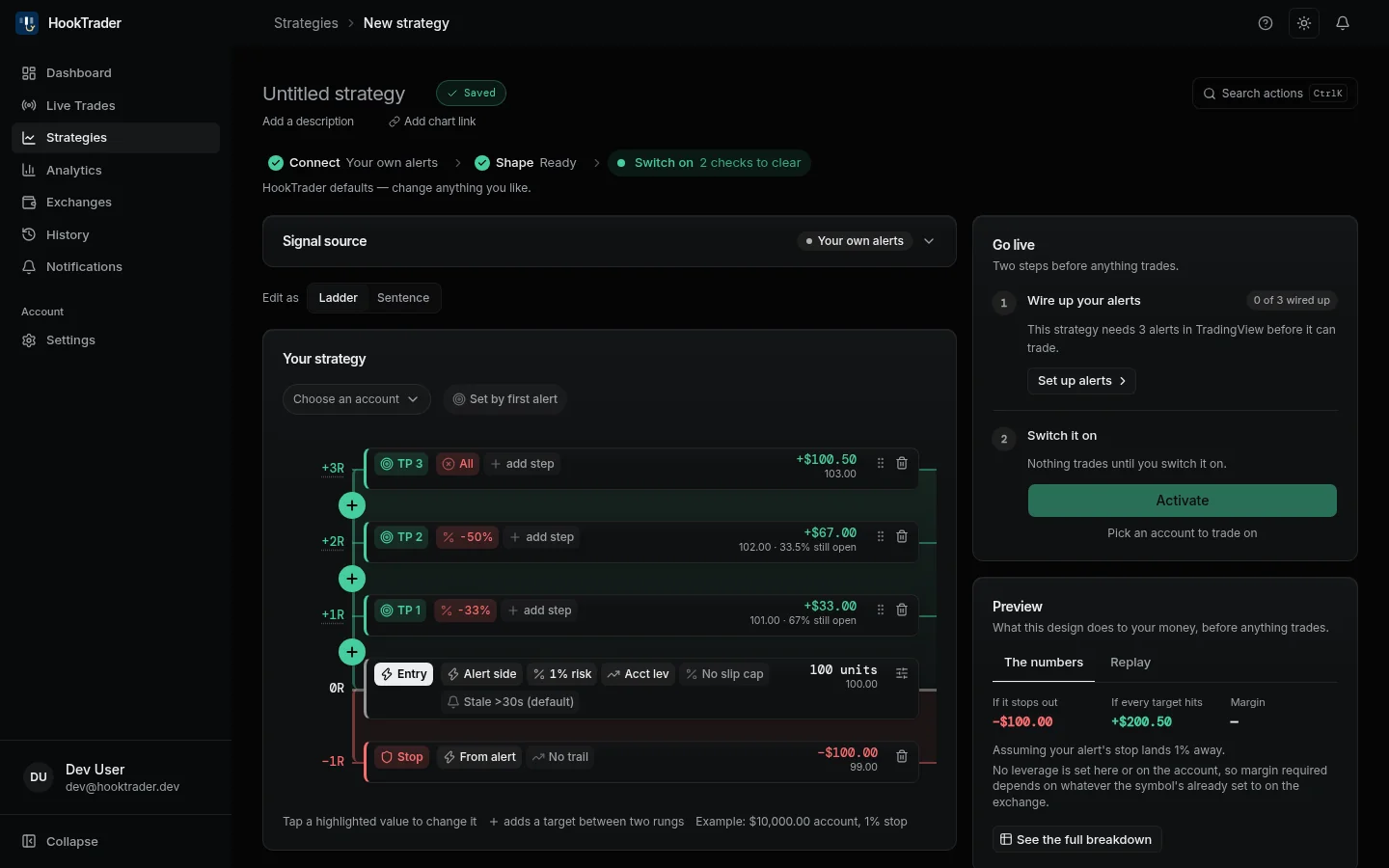
See What a target can do and Size and market.
Where targets come from#
Set Targets come from:
- a multiple of my risk: HookTrader prices targets from your fill and stop distance, and watches the price. An alert for the same target changes nothing.
- prices in the alert: each entry alert sends the target prices.
- a separate alert per target: there are no target prices. The trade closes when a close alert arrives.
Switch on#
Until you switch it on, alerts are recorded and never traded. If Wire up your alerts appears, see How alerts are read.
Change it later#
- On a strategy that is on, edits wait for Save changes. They apply from the next entry, never to an open trade.
- Pause stops new entries. Open trades keep their stop and targets.
- Tune needs 20 alerts. Proof needs 20 closed trades.
- Delete strategy does not close an open position on Binance.