How your trade is protected
HookTrader sets every level from your fill price.
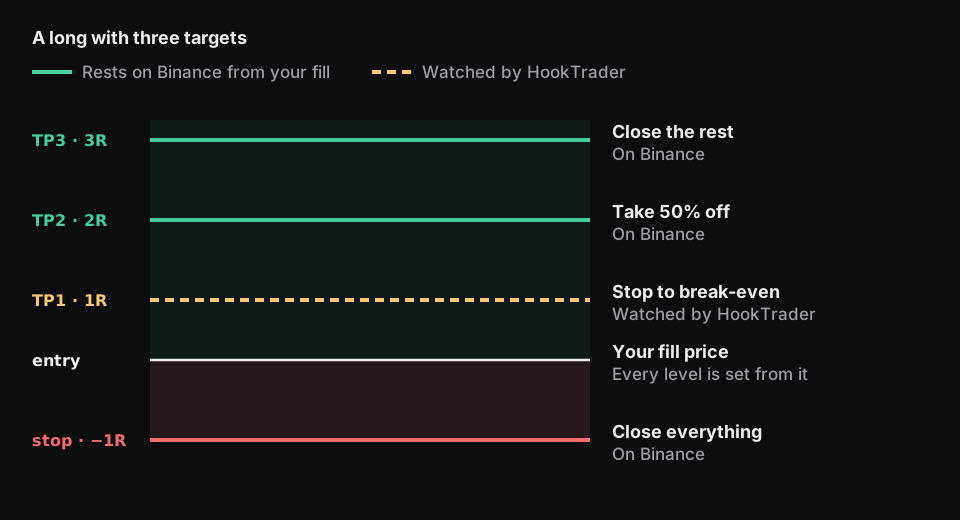
What rests on Binance#
- The stop, for the whole position, as soon as the entry fills.
- Targets that take profit, each sized for its step. Up to 8 rest at once, plus the last target, which closes the rest.
What HookTrader watches#
A target that only moves the stop, such as to break-even, has no order. HookTrader runs it when price crosses the level.
If price passes the stop while the position is open, HookTrader closes it at market. History shows Emergency close.
When the stop moves#
HookTrader replaces the stop on Binance at the new price, sized to what is open. If the new stop is through the price, it keeps the old one. If that is through too, it closes at market.
Trailing stops#
A target's start trailing the stop step takes a distance, as a percentage of price. From then on HookTrader keeps your stop that far behind the best price, replacing it on Binance each time price runs at least 0.1% further. After a restart the last stop placed is still on Binance, and the trail carries on from it.
Trail alerts from the Signal Connector or your indicator also move your stop on Binance.
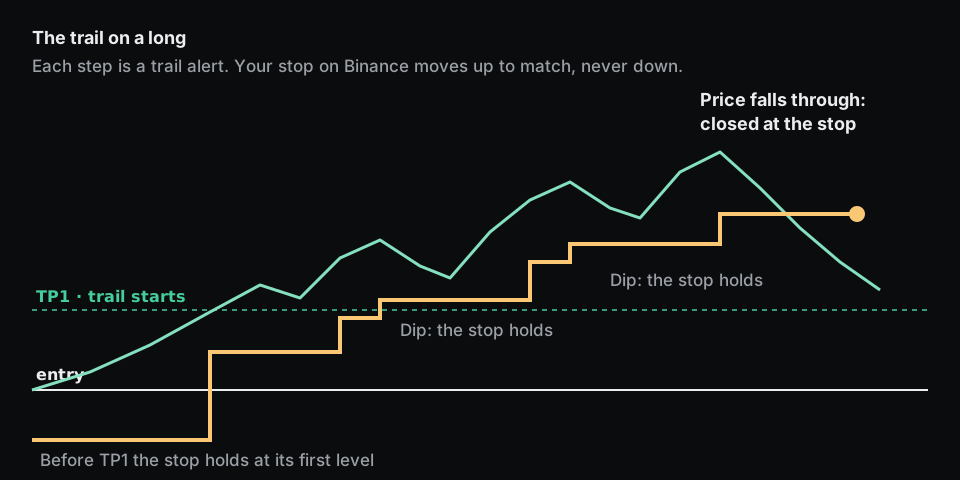
A trail never loosens. HookTrader's own steps only tighten it, and an alert that would loosen it is rejected: Signals shows Trailing stop would move the wrong way.
After a partial close or an add#
- Taking some off leaves the stop sized for the whole entry. Binance never closes more than you hold.
- An add is unprotected until the stop next moves. Put a stop move in the same target (What a target can do).
Keep the account to yourself#
HookTrader protects only positions it opened, so give it its own Binance sub-account. Live Trades warns in amber when Binance's orders do not match the plan.
If HookTrader is unavailable#
Resting orders still fill. Watched targets wait. An alert sent meanwhile can be lost. On restart, HookTrader re-arms every open trade and records missed fills.